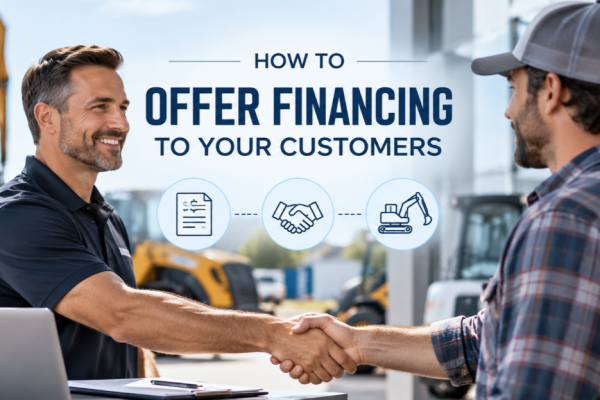
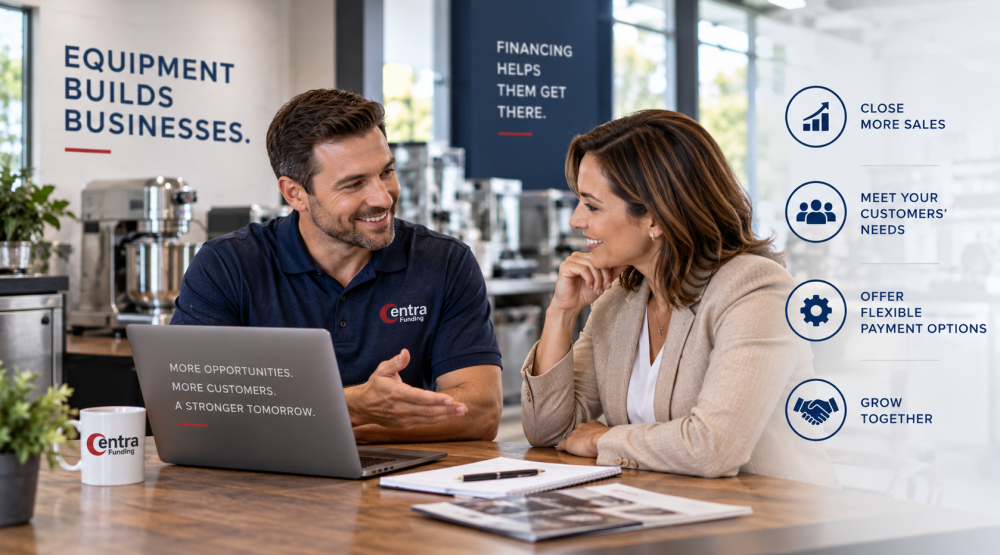
Vendor financing gives equipment manufacturers, dealers, distributors, and other sellers a way to offer financing to customers as part of the purchasing process.
Rather than requiring customers to pay the full equipment cost upfront or find financing on their own, vendors can partner with a third-party financing company that handles the financing transaction while the vendor stays focused on selling.
For equipment sellers, a well-structured vendor financing program can help reduce upfront cost barriers, keep sales opportunities moving, protect margins, and give customers another way to purchase the equipment they need.
Key Takeaway: Third-party vendor financing allows an equipment seller to offer customers access to financing without becoming the lender, underwriting customer credit, or carrying the receivable itself.
What Is Vendor Financing?
Vendor financing is a financing arrangement that helps a customer purchase equipment, products, technology, or other business assets from a seller.
Vendor financing generally takes one of two forms:
- Direct vendor financing: The seller extends credit or payment terms directly to the customer.
- Third-party vendor financing: The seller works with a financing company that provides financing to eligible customers purchasing the vendor’s equipment.
Centra Funding supports the third-party vendor financing model.
The vendor sells the equipment. The financing company handles the financing process. Once the transaction is completed and applicable funding requirements are satisfied, the equipment vendor is paid according to the financing arrangement.
This allows equipment sellers to offer financing to their customers without building an internal lending operation, carrying customer receivables, or managing ongoing financing payments.
How Does Vendor Financing Work?
A vendor financing program can be incorporated directly into the equipment sales process, giving customers a financing option while they are already considering a purchase.
Although every transaction is different, the process generally works like this:
1. The Customer Selects Equipment
The customer chooses the equipment, machinery, technology, or other business assets they want to purchase.
2. The Vendor Introduces Financing
The seller lets the customer know that financing is available rather than requiring the customer to arrange financing independently.
Financing may be introduced through an equipment quote, sales representative, website, proposal, customized financing link, or financing calculator.
3. The Customer Applies
The customer completes a financing application with the vendor’s financing partner.
4. The Financing Request Is Reviewed
The financing provider evaluates the applicant and transaction according to its underwriting requirements.
Factors may include credit history, time in business, transaction amount, equipment type, financial strength, and the overall borrower profile.
5. Financing Documents Are Completed
If the transaction is approved and the customer chooses to proceed, the required financing documents are completed.
6. The Vendor Gets Paid
Once the transaction is completed and applicable funding requirements are satisfied, the financing provider sends payment to the equipment vendor.
The seller does not have to wait for the customer to make payments over the life of the financing agreement.
Why Should Equipment Vendors Offer Financing?
Commercial equipment purchases can represent a significant investment for a customer.
A customer may need the equipment and see the value in purchasing it, but hesitate to commit a large amount of available cash all at once.
Offering financing gives that customer another purchasing option.
For vendors, financing can also become a valuable sales tool. Instead of discussing only the total equipment price, a salesperson can introduce financing and help the customer evaluate the purchase in the context of cash flow and potential monthly payments.
Centra’s equipment vendor financing programs are designed to help manufacturers, dealers, distributors, and other equipment sellers make financing part of the sales conversation.
Benefits of Vendor Financing for Equipment Sellers
Reduce Upfront Cost Barriers
A large upfront purchase price can cause a customer to delay an equipment decision even when the equipment is needed.
Financing allows customers to evaluate the purchase without necessarily committing the entire cost upfront.
Keep Sales Opportunities Moving
If a customer has to leave the sales process and independently search for financing, the transaction may lose momentum.
A vendor financing program keeps the financing option connected to the equipment purchase and provides a clearer next step for the customer.
Protect Your Margins
When customers hesitate because of price, discounting is not the only option.
Financing can give sales teams another way to address affordability by helping customers evaluate scheduled payments instead of requiring the vendor to reduce the equipment price.
Help Customers Preserve Working Capital
Businesses need cash for payroll, inventory, hiring, marketing, rent, expansion, and other operating expenses.
Financing equipment can allow customers to preserve more working capital rather than using a significant portion of available cash for a single purchase.
For a deeper explanation, read our guide on how equipment financing can help preserve business cash flow.
Support Larger Equipment Purchases
Financing may allow customers to consider the equipment solution that best fits their business rather than limiting the purchase solely to the cash they currently have available.
Depending on the transaction, that may mean purchasing multiple units, adding accessories, completing a larger equipment package, or investing in additional eligible project costs.
Shorten the Sales Cycle
Financing can help address budget objections earlier and give customers another path to move forward.
When financing is introduced during the sales process rather than after the customer has already stalled, it may help keep the transaction moving.
Give Sales Teams Another Tool
Financing gives sales representatives another option when customers hesitate because of upfront cost.
Instead of ending the conversation at price, the salesperson can introduce financing and continue discussing how the equipment may fit the customer’s business.
Get Paid Without Carrying the Receivable
With third-party vendor financing, the seller does not have to finance the customer directly.
The financing provider manages the financing agreement while the vendor receives payment according to the funded transaction.
Vendor Financing vs. Offering Payment Terms Yourself
The distinction between vendor financing and directly extending customer credit is important.
If your business extends credit directly to customers, you may be responsible for:
- Establishing credit requirements
- Reviewing customer credit
- Managing payment terms
- Carrying customer receivables
- Monitoring payments
- Handling collections
- Waiting for payment over time
With a third-party financing partner, the financing company handles the financing transaction.
This allows the vendor to stay focused on selling equipment and serving customers while still being able to provide a financing option at the point of sale.
When Should You Offer Financing to Customers?
Financing does not need to be introduced only after a customer objects to the price.
In many cases, it can be more effective to present financing as a normal purchasing option early in the sales process.
Vendors can promote financing through:
- Equipment quotes
- Sales proposals
- Product pages
- Sales emails
- Website landing pages
- Financing calculators
- Trade show materials
- Sales presentations
- Customized financing links
Making financing visible early gives customers more time to consider how they want to structure their equipment purchase.
Want to Make Financing Part of Your Sales Process?
Centra helps equipment sellers integrate financing into the customer buying experience.
Explore Vendor Financing Programs
What Should a Vendor Financing Program Include?
Not all vendor financing programs provide the same level of support.
When evaluating a financing partner, look beyond whether the company can simply fund an equipment transaction. Consider how well the program supports both your customers and your sales team.
Simple Customer Applications
Customers should have access to a clear and straightforward financing application that does not create unnecessary friction in the purchasing process.
Responsive Credit Decisions
The financing process should support the pace of the equipment sale rather than create unnecessary delays.
Flexible Financing Options
Your customers may have different transaction sizes, equipment needs, credit profiles, and business histories.
A vendor financing partner should be able to evaluate a broad range of transactions and business types.
Programs for Newer Businesses
Some equipment vendors regularly sell to startups, new locations, or recently established businesses.
Having access to financing options that may consider newer businesses can help vendors support a broader range of customers. Centra also offers dedicated equipment financing for startups and new businesses.
Digital Financing Tools
Online applications, electronic documentation, financing calculators, and customized links can make financing easier for customers and sales teams to use.
Customized Financing Links
A customized financing link gives vendors a simple way to send customers directly into the financing process.
Marketing Support
Website content, financing resources, sales materials, and customer-facing tools can help make financing more visible throughout the buying journey.
Dedicated Vendor Support
Your sales team should know who to contact when a customer has financing questions or a transaction needs additional attention.
What Types of Equipment Sellers Can Offer Financing?
Vendor financing can support equipment sellers across a wide range of commercial industries.
- Construction and heavy equipment sellers
- Restaurant and foodservice equipment suppliers
- Manufacturing machinery sellers
- Automotive equipment suppliers
- Medical and veterinary equipment sellers
- Printing and fabrication equipment suppliers
- Commercial vehicle and trailer dealers
- Material handling equipment sellers
- Technology and office equipment providers
- Agricultural equipment dealers
- Franchise equipment and service providers
- Specialty commercial equipment sellers
Vendor financing can support both individual equipment purchases and larger equipment packages, depending on the transaction and financing program.
How to Choose a Vendor Financing Partner
The financing experience becomes part of your customer’s overall experience with your company, so choosing the right financing provider matters.
Before selecting a vendor financing partner, consider asking:
- What transaction sizes can you support?
- What types of equipment can be financed?
- Can you work with established and newer businesses?
- How simple is the customer application?
- How quickly are financing requests reviewed?
- Are electronic documents available?
- Can our company receive a customized financing link?
- Do you provide financing tools for our sales team?
- Is marketing support available?
- Will we have a dedicated point of contact?
- How and when does the vendor get paid?
The right financing partner should make financing easier for both the customer and the sales team, not add complexity to the purchase process.
Vendor Financing With Centra Funding
Centra Funding works with equipment manufacturers, dealers, distributors, and other commercial sellers to help integrate financing into the customer purchasing process.
Through our vendor financing programs, sellers can offer customers financing from $10,000 to $10 million while keeping their own sales teams focused on closing equipment sales.
Our vendor programs can include:
Customized Financing Links
Give your sales team a direct financing link that can be shared with customers through quotes, emails, websites, and sales conversations.
Online Financing Resources
Make financing easier for customers to access through a digital experience.
Flexible Financing Programs
Support a range of equipment transactions, customer profiles, and business financing needs.
New Business Financing Options
Provide another potential financing path for qualified startups and newer businesses.
Electronic Documentation
Help simplify the transaction process with digital financing documents.
Vendor Marketing Support
Make financing more visible with website resources, sales tools, and customer-facing marketing materials.
Dedicated Vendor Support
Work with a financing team that understands equipment transactions and vendor relationships.
Frequently Asked Questions About Vendor Financing
What is vendor financing?
Vendor financing is an arrangement that helps customers finance equipment or other business assets purchased from a seller. The vendor may extend credit directly or work with a third-party financing provider.
How does third-party vendor financing work?
The vendor introduces financing during the sales process, and the customer applies with the financing provider. The financing company reviews the transaction and handles the financing process. Once the transaction is completed and funding requirements are satisfied, the vendor is paid.
Does the equipment vendor lend the money?
Not necessarily. With a third-party vendor financing program, the financing company provides the financing while the equipment seller remains focused on the sale.
Why should equipment sellers offer financing?
Offering financing can help reduce upfront cost barriers, preserve sales momentum, protect margins, give customers more purchasing flexibility, and provide sales teams with another way to move equipment purchases forward.
How does the vendor get paid?
Once an approved transaction has been completed and applicable funding requirements are satisfied, the financing provider sends payment to the equipment vendor according to the transaction terms.
Can vendors offer financing without managing customer payments?
Yes. With a third-party financing provider, the equipment seller generally does not have to carry the customer receivable or manage ongoing financing payments.
Can startups use vendor financing?
Some financing programs may consider startups and newer businesses. Approval and available financing terms depend on the applicant, transaction, equipment, and underwriting requirements.
What types of equipment can be financed?
Many types of commercial equipment may be eligible, including construction equipment, restaurant equipment, manufacturing machinery, automotive equipment, commercial vehicles, technology, medical equipment, and other business assets.
How can vendors help customers estimate financing payments?
Financing calculators can help customers evaluate potential monthly payments before applying. Customers can use Centra Funding’s equipment financing calculator to explore estimated payment scenarios.
Offer Financing to Your Customers
Make financing part of the way you sell.
Centra Funding helps manufacturers, dealers, distributors, and other equipment sellers provide customers with financing options while giving sales teams additional tools to move purchases forward.
Offer financing from $10,000 to $10 million, help customers overcome upfront cost concerns, and get paid when eligible transactions are completed and funded.