Purchasing equipment can be a major investment for any business. Whether you need construction equipment, manufacturing machinery, restaurant equipment, vehicles, technology, or other business-critical assets, paying the full cost upfront can put unnecessary pressure on your cash flow.
An Equipment Finance Agreement (EFA) gives businesses one way to acquire the equipment they need while spreading the cost over predictable payments.
So, how does an EFA work, and how does it differ from an equipment loan or lease?
What Is an Equipment Finance Agreement?
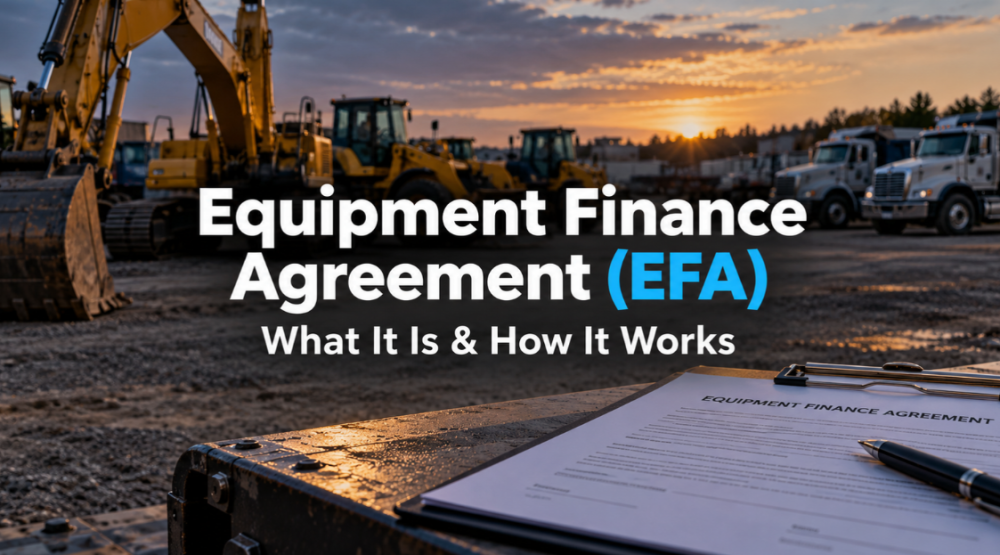
An Equipment Finance Agreement, commonly called an EFA, is a financing arrangement businesses can use to purchase equipment.
Under an EFA, the financing company provides funds for the equipment purchase, and the business makes scheduled payments over an agreed term. In many cases, the equipment serves as collateral through a security interest.
Unlike a traditional equipment lease, where the leasing company may retain ownership of the asset, an EFA generally functions more like a financed equipment purchase.
How Does an Equipment Finance Agreement Work?
The process is generally straightforward:
- Your business selects the equipment it needs.
- You apply for equipment financing.
- Next, the financing company reviews the business, credit profile, equipment, and transaction.
- If approved, the financing company typically sends funds to the equipment vendor or seller after the required documentation is completed.
- Your business then makes scheduled payments according to the terms of the EFA.
Once the business satisfies the agreement, the financing company releases its security interest in the equipment according to the financing documents.
EFA vs. Equipment Loan: What Is the Difference?
An EFA and a traditional equipment loan can accomplish a similar goal: helping a business purchase equipment without paying the entire cost upfront.
However, the primary differences are generally found in the contract structure and how payments and finance charges are documented.
A traditional simple-interest equipment loan typically separates principal and interest. Depending on the loan terms, paying the balance early may reduce the total interest paid.
By contrast, an EFA may establish the business’s payment obligation when the agreement is executed, which can create consistent scheduled payments throughout the term.
EFA vs. Equipment Lease
An EFA also differs from a traditional equipment lease.
With many equipment leases, the lessor owns the equipment during the lease term. At the end of the agreement, the business may have the option to return the equipment, purchase it, or continue leasing it, depending on the structure.
With an EFA, the transaction generally functions as a financed purchase rather than temporary use of equipment.
Benefits of an Equipment Finance Agreement
Preserve Working Capital
Instead of using a large amount of cash to purchase equipment outright, financing allows businesses to keep more cash available for payroll, inventory, marketing, hiring, expansion, and other operating needs.
Predictable Payments
EFAs typically provide scheduled payments established at the beginning of the agreement. As a result, businesses may find it easier to incorporate equipment costs into cash-flow planning and budgeting.
Finance Revenue-Producing Equipment
Rather than waiting until enough cash is available to make a purchase, financing may allow a business to put equipment into operation sooner.
Potential Tax Advantages
Businesses purchasing qualifying equipment through certain financing structures may be eligible for depreciation deductions, including Section 179 or bonus depreciation.
However, tax treatment depends on the business and transaction. Businesses should consult a qualified tax professional regarding their specific situation.
Streamlined Equipment Purchasing
In addition, equipment financing companies often work directly with equipment vendors and sellers. This can help coordinate documentation, funding, and delivery.
Can You Use Section 179 With an EFA?
Potentially, yes.
Because many EFAs function as financed equipment purchases, qualifying equipment may be eligible for Section 179 when the business meets the applicable ownership, use, and tax requirements.
Financing the equipment does not necessarily prevent a business from claiming the deduction. However, IRS requirements and applicable limits still apply.
What Types of Equipment Can Be Financed With an EFA?
Businesses may use an EFA to finance many types of commercial equipment, including:
- Construction and heavy equipment
- Manufacturing machinery
- Restaurant and commercial kitchen equipment
- Automotive equipment
- Medical equipment
- Transportation equipment
- Technology and office equipment
- Material handling equipment
- Agricultural equipment
- Franchise equipment and improvements
However, available financing depends on the equipment, business profile, transaction size, credit history, time in business, and other underwriting factors.
Is an Equipment Finance Agreement Right for Your Business?
An Equipment Finance Agreement may be worth considering if your business:
- Needs equipment but wants to preserve cash
- Plans to keep the equipment for the long term
- Prefers predictable payments
- Wants to spread an equipment investment over time
- Needs equipment to increase production, revenue, or efficiency
Ultimately, the right financing structure depends on your equipment, cash flow, business goals, and how long you expect to use the asset.
Frequently Asked Questions About Equipment Finance Agreements
What does EFA stand for in equipment financing?
EFA stands for Equipment Finance Agreement. It is a financing structure businesses can use to purchase equipment through scheduled payments rather than paying the full purchase price upfront.
Is an EFA the same as an equipment loan?
Not exactly. Both can help finance an equipment purchase, but the contract structure, calculation of finance charges, prepayment provisions, and other terms may differ.
Is an EFA the same as a lease?
No. An EFA generally functions as a financed equipment purchase, while a traditional lease typically involves using equipment owned by a lessor for a specified period.
Can an EFA qualify for Section 179?
Depending on the transaction, qualifying equipment purchased through certain EFA structures may be eligible for Section 179. Businesses should consult a qualified tax professional about their specific situation.
Can used equipment be financed with an EFA?
In many cases, yes. Eligibility for used equipment depends on factors such as the equipment’s age, condition, value, seller, and financing requirements.
What happens at the end of an EFA?
Once the business satisfies all obligations under the agreement, the financing company generally releases its security interest in the equipment according to the financing documents.
Finance the Equipment Your Business Needs
The right equipment can help your business increase capacity, improve efficiency, serve more customers, and create new opportunities for growth.
Centra Funding provides business and equipment financing solutions designed to help companies acquire the equipment they need while preserving working capital.
Financing is available from $10,000 to $10 million.